The wolf that came back.
An hour north of Zamora city, the Sierra de la Culebra rolls along the Portuguese border in a sea of oak and heather. It looks empty. It isn't: these hills hold the largest population of Iberian wolves in Western Europe, sharing the range with deer, wild boar and very few people. While much of Europe debates reintroducing the wolf, here it never fully left.
How to look for one — honestly
First, the truth: nobody can guarantee you a wolf. They are wild, intelligent and professionally uninterested in being seen. Anyone who promises a sighting is selling something. What you can do is stack the odds:
- Go at the golden hours. Dawn and dusk are when wolves move. That means an alarm clock and a thermos, not a leisurely brunch.
- Go with a specialist local guide. Guides who work the sierra know the territories, the recent activity and the ridges worth glassing. They multiply your chances — and they keep the watching responsible.
- Stay still, stay quiet, stay back. Wolf watching is done at distance, through binoculars and telescopes. The wolf sets the terms; you accept them.
- Treat every non-sighting as data. Tracks, scat, a distant howl, deer suddenly alert on a far hillside — with a good guide, even a wolf-less morning teaches you to read the landscape.
If the wolves don't show: the birds will.
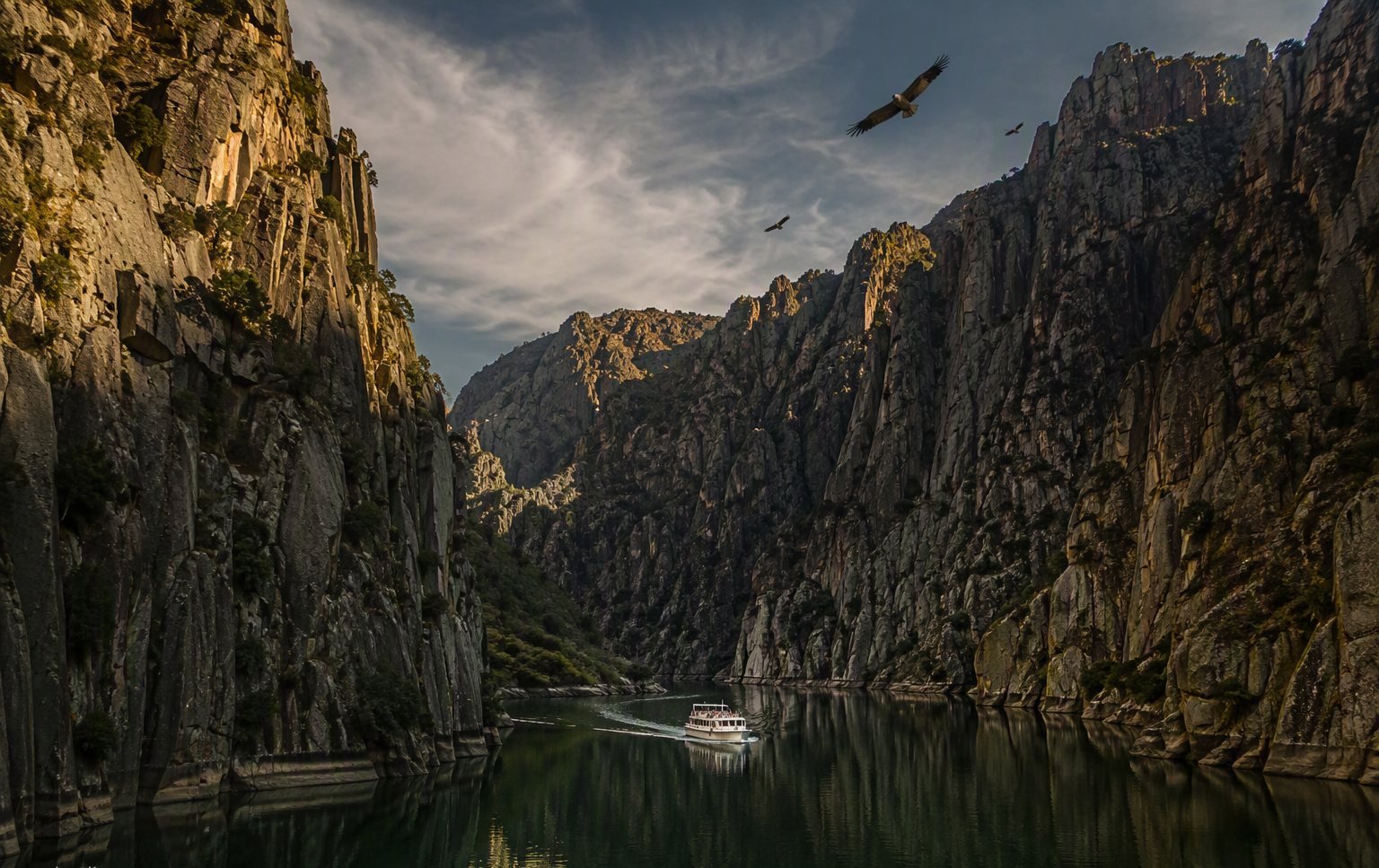
Pair the sierra with the Arribes del Duero canyon to the south-west and you have a consolation prize that isn't a consolation at all. The canyon is prime birdwatching country: vultures working the thermals off the cliffs in numbers, and the black stork — one of Europe's most elusive birds — nesting in the gorge. In wolf country, "Plan B" is still wilder than most people's Plan A.
Frequently asked questions
Can I see wolves without a guide?
You can try — the sierra is about an hour north and patient watching from public spots at dawn or dusk does sometimes pay off. But a specialist local guide knows where the packs have been and how to watch without disturbing them. Your chances, and the wolves' peace, both improve.
Is it safe?
Yes. Iberian wolves avoid people, and you'll be watching from a distance with optics. The greater risk is to the wolf, which is why the no-approach, no-feeding rules matter.
When should I go?
Autumn and winter give the best odds, with wolves more active in daylight. In any season, dawn and dusk are the hours that count. Book guided outings ahead, especially in the popular months.